
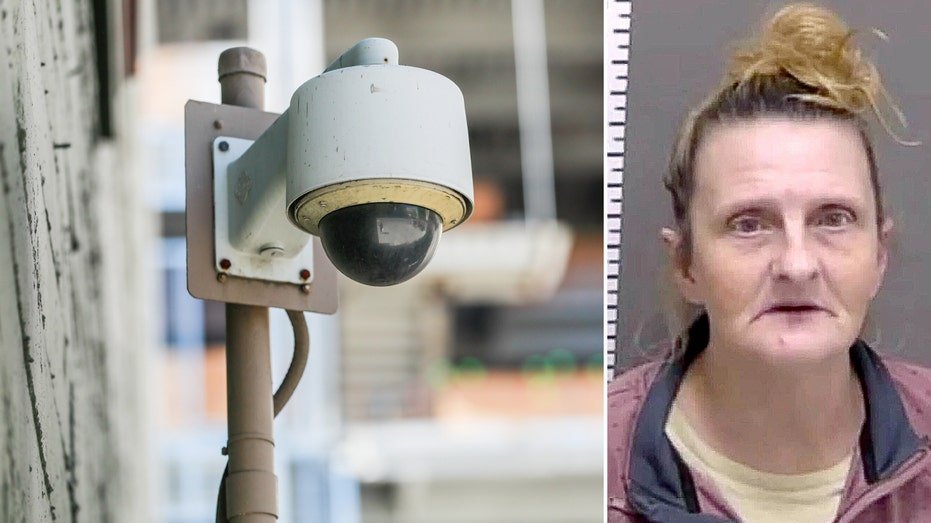
Angela Lipps says she has never been to North Dakota. She says she had never even been on an airplane. That didn’t stop the U.S. marshals from showing up at her home in Tennessee and arresting her.
Lipps, a 50-year-old grandmother of five from Elizabethton, Tennessee, was taken into custody in July 2025 in connection with a bank fraud case more than 1,000 miles away in Fargo, North Dakota. She was not released until around Christmas Eve, meaning she spent more than five months in custody before the case was dismissed.
Investigators had used facial recognition software to compare surveillance images from the bank fraud case with photos of Lipps from her driver’s license and social media. The result, according to her defense attorney, was a case that never should have gone this far.
Sign up for my FREE CyberGuy Report
HOW SURVEILLANCE TECH LED POLICE TO ACCUSE THE WRONG PERSON
The case began with bank fraud reports in Fargo and nearby West Fargo. Police were looking for a suspect who allegedly used a false military ID to take money from accounts.
Detectives reviewed surveillance footage and used facial recognition technology to search for a possible match. Then-Fargo Police Chief Dave Zibolski has described the tool as “an AI function through the North Dakota State Intelligence Center.”
Jay Greenwood, the Fargo defense attorney appointed to represent Lipps, joined our “CyberGuy Report” podcast at CyberGuyPodcast.com to explain how a facial recognition lead helped set the case in motion. His warning was simple: police can use facial recognition as a tool, but they still need to verify what the technology claims. Greenwood said the images used in the case were not exactly crystal clear.
“They had security footage of some terribly placed security cameras from above,” Greenwood said. “And they had a couple of still images, poor still images from these cameras that they sent to a company to do facial recognition.”
That search pointed investigators to Lipps. Greenwood said detectives then looked at her social media pages and moved forward with the case. “They did not do any other investigation prior to her arrest in bringing her to North Dakota,” Greenwood said. Police then sought an arrest warrant. Lipps was arrested in Carter County, Tennessee, and held as a fugitive from justice.
Lipps says U.S. marshals arrested her at gunpoint while she was babysitting young children. She was taken to a local jail in Elizabethton, Tennessee, while she waited to be extradited to North Dakota.
Greenwood said Lipps told authorities from the beginning that she had never been to North Dakota. “She told them I’d never been to North Dakota. I’ve never been on an airplane,” Greenwood said. “She really doesn’t leave the 100- to 200-mile radius of Elizabethton ever.”
Still, Lipps remained in jail for months. Fargo Police Chief Travis Stefonowicz told CyberGuy that the department’s review found Lipps was arrested in Tennessee on July 14, 2025, and held on a probation violation.
“Tennessee authorities notified the Cass County Sheriff’s Office on October 20, 2025, that Ms. Lipps had a waiver of extradition to North Dakota and was available for transport to the Cass County Jail,” Stefonowicz said.
Stefonowicz said Fargo Police could not determine from available information why Lipps remained in Tennessee custody for as long as she did before being transported to North Dakota.
“We have been unable to determine based on available information if the length of time Ms. Lipps was in jail in Tennessee before being transported to North Dakota was due to serving time for a probation violation or if it was because she fought extradition,” Stefonowicz said.
Greenwood said she fought extradition and waited in Tennessee before she was taken to North Dakota around Halloween. “Gave her her first ever plane ticket, ever plane ride,” Greenwood said. “And she spent it in custody, flying to North Dakota.”
A woman who says she had never flown before got her first plane ride in custody, headed to fight charges in a state she says she had never visited.
Stefonowicz was appointed interim chief on March 30 after former Chief Dave Zibolski retired on March 27. Fargo Police said Zibolski’s retirement was family-related and unrelated to this case. Stefonowicz was officially selected as Fargo’s next police chief during the Fargo City Commission meeting on May 11.
In a statement to CyberGuy, Stefonowicz said the arrest warrant reflected that prosecutors and a judge had found probable cause.
“The Fargo Police Department takes the civil rights and due process of all individuals involved in our investigations very seriously. Regarding the case of Ms. Lipps, the issuance of an arrest warrant indicated that the Cass County State’s Attorney and a judge determined probable cause existed for the charges,” Stefonowicz said.
He said the charges were dismissed without prejudice, meaning they could be refiled if additional investigation supports doing so.
“This remains an ongoing investigation, and we are still working to verify and corroborate information to determine, definitively, who was and was not involved in this home equity loan bank fraud scheme,” Stefonowicz said.
Fargo Police also clarified that the department does not own facial recognition technology or contract directly with vendors that provide it.
“However, there are state and national law enforcement intelligence centers that incorporate facial recognition technology and are used by agencies across the country, including in our state,” Stefonowicz said. “On occasion, FPD investigators may submit inquiries to those intelligence centers, in order to help generate leads through facial recognition for potential suspects or persons of interest in local investigations.”
That distinction matters. Fargo Police says it does not run facial recognition in-house, but investigators may still use outside intelligence centers to generate leads. That puts the focus back on what guardrails exist before those leads support an arrest.
That response adds an important caveat. Lipps’ defense says she was wrongly accused and later cleared by basic records. Fargo Police say the case remains open and investigators are still trying to determine who was involved.
AMAZON ADDS CONTROVERSIAL AI FACIAL RECOGNITION TO RING
Once Greenwood got involved, he started looking for proof of where Lipps had been during the alleged bank fraud. The answer came from everyday records. Her family sent bank records showing activity near her home in Tennessee during the same period Fargo authorities claimed she was in North Dakota.
The records showed her depositing Social Security checks and making local purchases. “She was in Elizabethton and the surrounding communities depositing her Social Security checks,” Greenwood said. “Buying Ubers, cigarettes, gas, all that stuff.”
Greenwood said he forwarded the records to the state’s attorney. After a police interview, the case was dismissed. Lipps was released on Christmas Eve.
Fargo Police gave CyberGuy a more detailed timeline. Stefonowicz said Lipps made her first court appearance in North Dakota on Oct. 31, 2025, but the detective assigned to the case did not learn she was in custody in North Dakota until Dec. 5.
“Because she had legal representation, attorney consent was required before our detectives could interview her,” Stefonowicz said. “An interview was first granted by Ms. Lipps’s defense attorney on December 19, 2025.”
After that interview, Stefonowicz said Fargo Police determined that further investigation was needed.
“On December 23, 2025, the FPD detective, the Cass County State’s Attorney and the presiding judge mutually agreed to dismiss the charges without prejudice to allow for additional investigation,” Stefonowicz said. “Ms. Lipps was subsequently released from the Cass County Jail on December 24, 2025.”
By then, she says the damage was already done. She says she lost her home, her car, her reputation and her dog while she was locked up.
Fargo Police said it conducted a comprehensive internal review after the case. Stefonowicz said former Chief Dave Zibolski addressed the investigation at a March 24 news conference.
“With respect to this case, we have conducted a comprehensive internal review,” Stefonowicz said. “During a news conference on March 24, former Chief of Police Dave Zibolski addressed areas where our initial investigation could have been more complete and emphasized that further work is required to fully understand who was and was not involved in this scheme.”
Fargo Police has since adopted a formal facial recognition technology policy. Stefonowicz said the department did not previously have a standalone policy because Fargo Police does not conduct facial recognition analysis, provide that service to other agencies or maintain in-house facial recognition technology.
“We have since adopted a formal policy for facial recognition technology (FRT) use for our agency,” Stefonowicz said.
He said the case prompted Fargo Police leadership to revisit that approach.
“This case has prompted FPD leadership to re-evaluate that approach related to having a specific FRT policy,” Stefonowicz said. “FPD Policy 610, which formally establishes parameters and expectations for the use of FRT, was published as of Wednesday, March 25.”
That policy change matters because it shows the case prompted Fargo Police to formalize how investigators may use facial recognition leads, even when the department does not run the technology itself.
Facial recognition can help generate leads. However, critics warn that it can also produce false matches, especially when image quality is poor or the system compares faces against massive databases.
Some systems pull from public photos online, including social media images and other public-facing photos. That means many people may appear in search databases without realizing it.
Greenwood said police need to treat the technology as one investigative tool, not a shortcut around basic detective work.
“I’ve told numerous people, like, it’s a tool,” Greenwood said. “It should be one of the tools that law enforcement can use.”
Then he explained what needs to happen next. “They’ve got to learn to use the other tools to verify what they’re being told by this machine,” Greenwood said.
That is the key issue. A facial recognition hit should push investigators to ask more questions. It should never end the conversation.
Angela Lipps is not the first person to say facial recognition helped put them in handcuffs. Other cases have involved people wrongfully arrested after software produced a mistaken match. Civil liberties groups have also warned that facial recognition systems can perform worse on some groups, including darker-skinned men and women.
That raises a serious question for every police department using this technology. What safeguards exist before a person gets arrested? A bad match on a screen can turn into a search warrant and jail time. For Lipps, that risk became painfully real.
9 ONLINE PRIVACY RISKS YOU PROBABLY DON’T KNOW ABOUT
Most people will never face anything like this. Still, the Lipps case shows how your digital footprint can follow you in ways you may never expect.
If law enforcement contacts you about something you did not do, do not try to talk your way out of it. Stay calm and ask for an attorney. Even innocent people can say something that gets misunderstood.
Bank transactions, receipts, phone location records, work schedules and medical appointments can help establish where you were on a certain date. You do not need to track every moment of your life. However, basic digital records can help if a serious mistake ever happens.
Check what photos you post publicly. Also, look at tagged photos from friends and family. Your face can appear online even when you did not post the picture yourself.
Data broker sites collect and sell personal details. A data removal service can help remove your information from these databases. You can also do it manually, but it takes time, and the information can reappear. Check out my top picks for data removal services and get a free scan to find out if your personal information is already out on the web by visiting CyberGuy.com.
Your city or state may already use facial recognition tools. Ask what rules police must follow before they use an AI match in a criminal case. At a minimum, departments should require independent evidence before an arrest.
AI can help investigators move faster, but speed creates risk when people skip basic steps. Police still need records, timelines and common sense. Facial recognition can make mistakes. It can misread poor images. It can point to the wrong person. And when that happens, the consequences do not stay on a screen. They show up at someone’s front door.
This case should make every police department pause. Facial recognition may help find leads, but it should never be enough to upend someone’s life. Angela Lipps says she lost months behind bars for a crime she did not commit in a state she had never visited. Her attorney says basic records later helped prove she was in Tennessee. That should have happened before spending months in jail. Greenwood summed up the case this way: “Ridiculous case never should have happened.” Technology can help police solve crimes. But when a computer match replaces real detective work, innocent people can pay the price. For the full conversation with Angela Lipps’ defense attorney and more on how this case unfolded, listen to the “CyberGuy Report” podcast at CyberGuyPodcast.com.
If a facial recognition match can help send a grandmother to jail, what guardrails should every police department be forced to follow before someone loses their freedom? Let us know by writing to us at CyberGuy.com.
Sign up for my FREE CyberGuy Report
Copyright 2026 CyberGuy.com. All rights reserved.